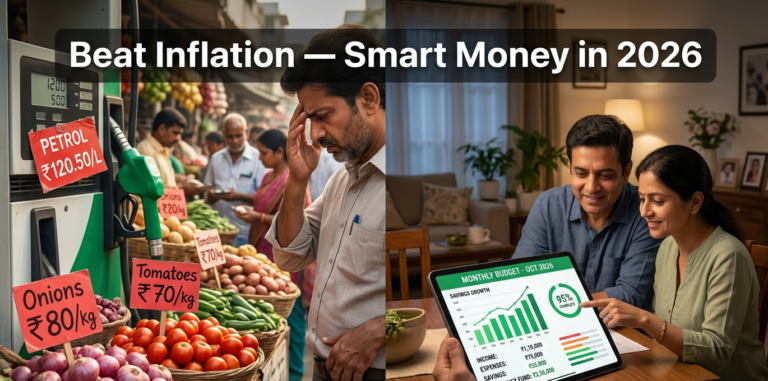
How to Manage Money During Inflation in India 2026: Smart Strategies That Work
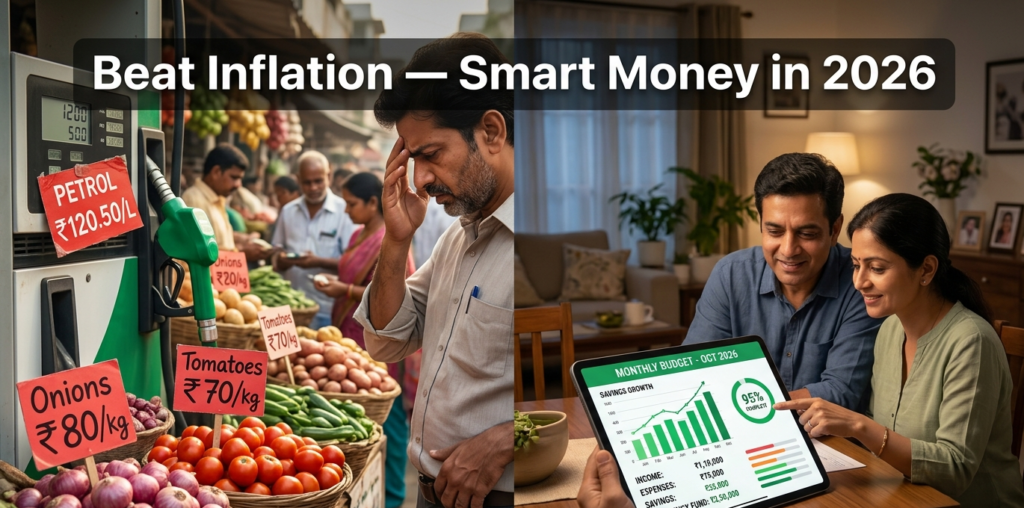
India’s retail inflation (CPI) has been persistently impacting household budgets — from vegetables and fuel to rent and school fees. When prices rise faster than your salary, your purchasing power shrinks every month. Managing money during inflation in India 2026 requires a deliberate strategy: cutting wasteful spending, restructuring debt at lower rates, and putting surplus into inflation-beating instruments. This guide gives you a practical, actionable playbook built for the Indian middle-class reality.
What Inflation Actually Does to Your Monthly Budget
Inflation does not hit every rupee equally. Food, fuel, and rent inflate faster than electronics or clothing. Understanding which categories hurt most helps you target your cuts smartly:
| Expense Category | Typical Inflation Impact | Your Action |
|---|---|---|
| Groceries & Food | High — 7–12% annually | Bulk buying, local mandis, meal planning |
| Fuel & Transport | High — 6–10% annually | Carpooling, metro/bus where possible, WFH days |
| Rent & Housing | Moderate — 5–8% annually | Negotiate at renewal, consider home loan EMI vs rent |
| Education Fees | High — 8–12% annually | Plan with education loan; avoid depleting emergency fund |
| Loan EMIs | Fixed — no inflation impact | Lock low fixed rates now — floating rates rise with inflation |
| Electronics & Gadgets | Low — 0–3% (often deflation) | Safe to defer purchases; prices often fall over time |
10 Proven Strategies to Manage Money During Inflation in India
- Rebuild the 50-30-20 budget: Reassign your budget categories — inflation has likely pushed needs above 50%. Immediately cut wants (dining out, OTT subscriptions, impulse shopping) before touching savings.
- Clear high-interest debt first: Credit card debt at 36–42% APR grows faster than inflation — it is your biggest financial enemy. Consolidate into a personal loan at 9.99% p.a. and eliminate it.
- Build a 6-month emergency fund urgently: Inflation raises the cost of your emergency fund target. If monthly expenses were ₹30,000 and now are ₹34,000, your 6-month fund target rises from ₹1.8 lakh to ₹2.04 lakh. Recalculate and top up.
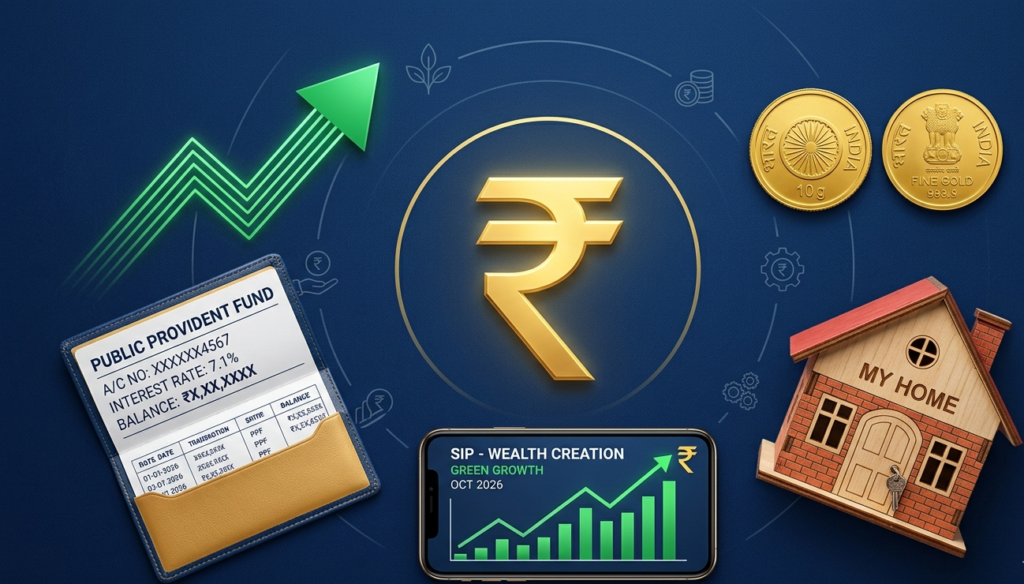
- Invest in inflation-beating instruments: Equity SIPs historically return 12–15% CAGR — well above 6% inflation. Increase SIP by ₹500 every 3 months. Even in inflation, do not pause SIPs.
- Renegotiate fixed costs: Insurance premiums, broadband, subscriptions — renegotiate annually. Switching insurers at renewal alone can save ₹3,000–8,000 per year.
- Lock in fixed-rate loans: Floating rate loans become expensive when RBI raises rates to fight inflation. Refinance to fixed-rate if you have floating rate personal or home loans.
- Avoid lifestyle inflation: When salary increases, resist upgrading lifestyle proportionally. Bank the full increment for 6 months before increasing any discretionary spending.
- Track every rupee for 30 days: Use a simple expense app or notebook. Most households discover ₹3,000–8,000 in monthly leakage — subscriptions unused, duplicate services, convenience spending — that can be redirected to savings.
- Plan large purchases strategically: Defer non-urgent big-ticket items (new phone, furniture upgrade) by 6–12 months. Use our EMI calculator to confirm any purchase loan fits your budget before buying.
- Diversify income: Freelance projects, monetising a skill, or passive rental income adds a buffer above your inflation-eroded salary. Even ₹5,000/month extra changes the equation significantly.
Inflation & Your Loans — What You Must Know in 2026
Inflation affects borrowers in a nuanced way. On one hand, rising prices erode the real value of your outstanding debt — a ₹10 lakh loan is effectively cheaper in 3 years if inflation is 6% because ₹10 lakh will buy less. On the other hand, RBI raises interest rates to control inflation — which increases EMIs on floating rate loans.
| Loan Type | Rate Type | Inflation Impact on EMI | Recommended Action |
|---|---|---|---|
| Personal Loan | Fixed | No change — EMI stays same | Best choice during inflation |
| Home Loan | Floating | EMI rises when RBI hikes rates | Consider fixed rate option or prepay |
| Credit Card Debt | Revolving 36–42% | Most dangerous — compound interest | Consolidate immediately |
| Business / MSME Loan | Fixed / Floating | Revenue also inflates — manageable | Maintain repayment, expand cautiously |
🧮 Calculate Your EMI Affordability
Inflation-Smart Borrowing — When a Loan Actually Helps
Counterintuitively, inflation makes some borrowing smarter:
- Home purchase now vs later: If property prices inflate 8% annually, a ₹50 lakh home costs ₹54 lakh next year. A home loan EMI started today may be cheaper than renting + buying later at a higher price.
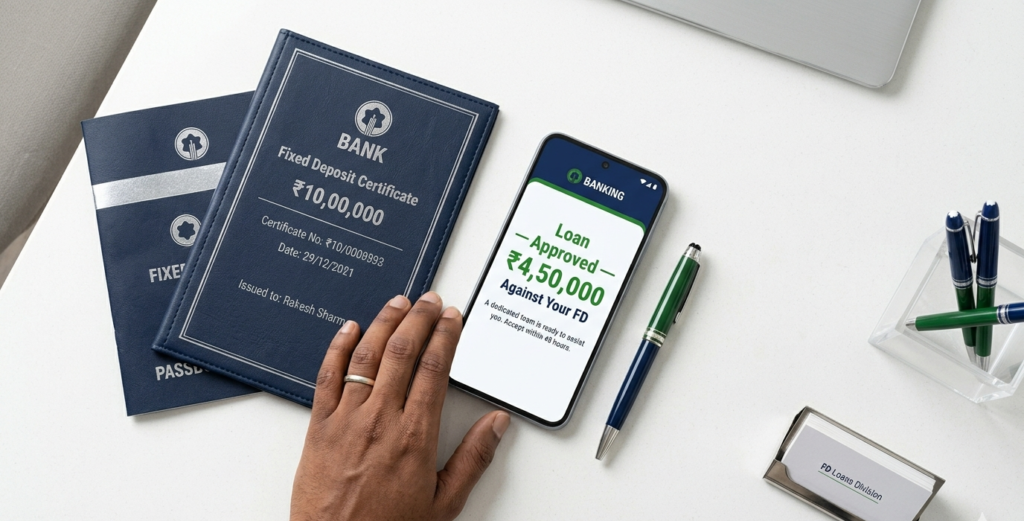
- Debt consolidation: Replacing 36–42% credit card debt with a 9.99% personal loan saves more in real terms as inflation rises — because your EMI is fixed while the card interest compounds.
- Business expansion: During inflation, your product/service prices also rise. A business loan to expand capacity today — before input costs rise further — can improve margins significantly.
- Solar loan: Electricity prices inflate every year. A solar loan to eliminate electricity bills is an inflation hedge — your EMI is fixed while your savings grow as electricity rates rise.
🏛️ Official Economic & Financial Portals:
- rbi.org.in — RBI monetary policy, repo rate, inflation data and borrower guidelines
- incometax.gov.in — Tax-saving investments to beat inflation impact (80C, 80D, NPS)
- indiapost.gov.in — PPF, NSC, Sukanya Samriddhi — safe inflation-beating instruments
- cibil.com — Monitor CIBIL score — inflation-driven missed payments hurt score fast
📞 Speak to Our Financial Advisor
Frequently Asked Questions
Inflation is real — your financial strategy must be smarter. Consolidate expensive debt, lock in fixed-rate loans, and keep investing. Pragati Loan personal loans from 9.99% p.a. — up to ₹5 crore, approved in 4 hours. Build financial resilience in 2026.